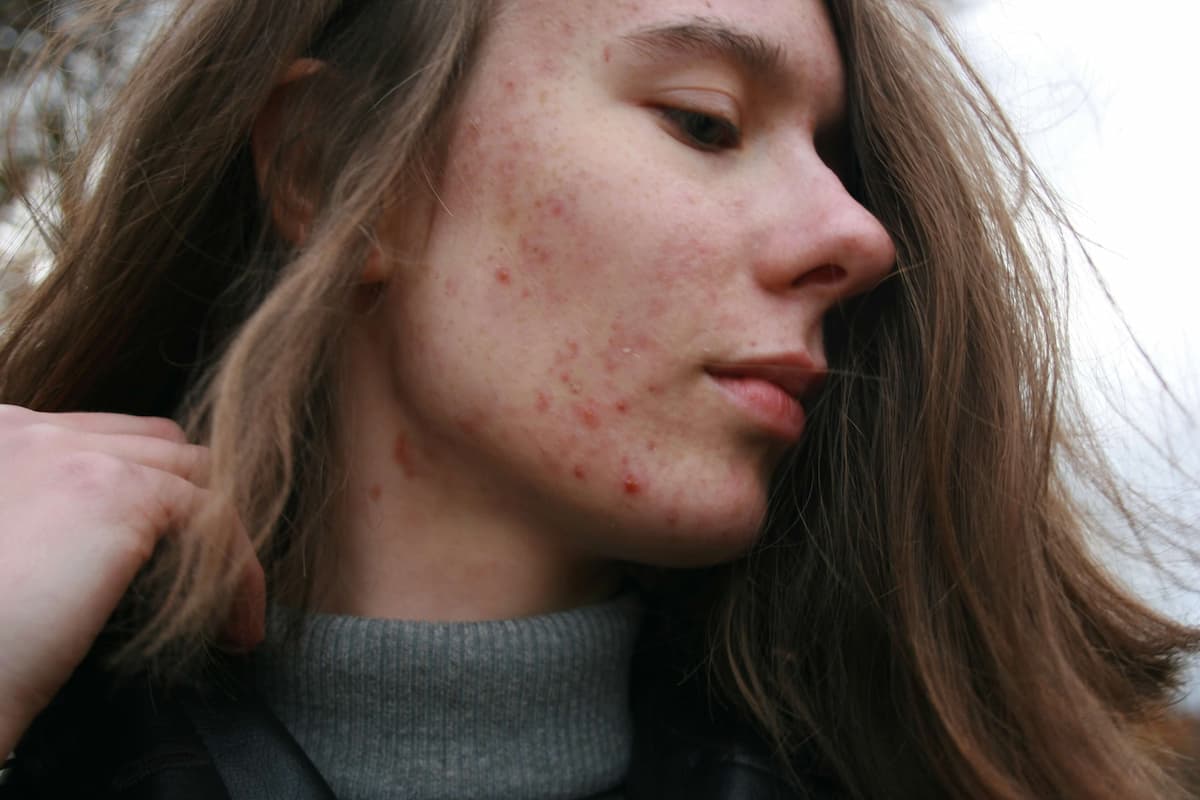
This guide explains how to identify hormonal acne, what drives it, and what approaches actually have evidence behind them.
How to Identify Hormonal Acne
Hormonal acne has a recognizable pattern that distinguishes it from other types of acne. Key identifying features include:
- Location: Primarily the lower face: the jawline, chin, and sometimes the neck. This is distinct from bacterial or congestion-related acne, which tends to cluster on the forehead, nose, and upper cheeks.
- Timing: In people who menstruate, breakouts often flare predictably in the week or two before a period, coinciding with the luteal phase when progesterone peaks and estrogen drops.
- Type of lesion: Deep, painful cysts or nodules that do not come to a head easily. These sit under the surface rather than forming whiteheads or blackheads.
- Resistance to topicals: If you have used benzoyl peroxide, salicylic acid, and retinoids consistently for 8+ weeks without improvement, hormonal involvement is likely.
What Causes Hormonal Acne?
The primary driver is androgen hormones, specifically testosterone and its derivatives, which stimulate sebaceous glands to overproduce oil. Elevated androgen activity creates conditions in the follicle where C. acnes bacteria can proliferate and inflammation occurs.
Hormonal fluctuations associated with acne include the menstrual cycle, polycystic ovary syndrome (PCOS), perimenopause, discontinuation of hormonal birth control, and chronic stress (which elevates cortisol, which in turn can influence androgen levels).
PCOS is significantly underdiagnosed. If you have persistent hormonal acne alongside irregular periods, excess hair growth, or difficulty losing weight, it is worth discussing PCOS screening with your doctor.
Topical Treatments: What Helps and What Does Not
Topical treatments have limited but real utility for hormonal acne. They cannot address the internal hormonal driver, but they can manage the surface symptoms: reducing inflammation, preventing bacterial overgrowth, and supporting skin cell turnover.
The most useful topicals for hormonal acne include retinoids (particularly tretinoin), azelaic acid for its anti-inflammatory and antibacterial properties, and niacinamide for barrier support and mild anti-inflammatory effects. Benzoyl peroxide is less effective on its own for deep cystic hormonal acne than it is for surface-level bacterial breakouts.
Systemic Approaches With Evidence
Spearmint Tea
Two well-designed studies have shown that two cups of spearmint tea per day significantly reduces free androgen levels in women with PCOS-related acne. The anti-androgenic effect is modest but real, making spearmint tea a reasonable and safe addition to any hormonal acne management approach.
Spironolactone
Spironolactone is a prescription medication (an aldosterone antagonist) that blocks androgen receptors in the skin. It is commonly prescribed off-label for hormonal acne in women and has strong clinical evidence. Typical doses for acne range from 50mg to 150mg daily. It is not appropriate for people who could become pregnant without reliable contraception.
Combined Oral Contraceptives
Certain combined oral contraceptives are FDA-approved for acne treatment. They work by reducing circulating androgens and stabilizing hormonal fluctuations throughout the cycle. Results take two to three months to become apparent.
Inositol
Inositol (particularly myo-inositol) has emerging evidence for improving insulin sensitivity and reducing androgen levels in people with PCOS. While research is ongoing, it is generally well-tolerated and worth discussing with a healthcare provider for people with PCOS-related acne.
Diet and Lifestyle Factors
High-glycemic diets, meaning those heavy in refined carbohydrates and added sugars, are associated with increased androgen activity and worsened acne in multiple studies. Dairy, particularly skim milk, has also been linked to acne severity in some research, though the relationship is less clear-cut.
Chronic stress elevates cortisol, which can worsen hormonal fluctuations. Sleep quality, exercise, and stress management are not peripheral concerns. They directly influence the hormonal environment that drives breakouts.
The Bottom Line
If your acne fits the hormonal pattern, meaning it's concentrated on the lower face, cyclical, cystic, and resistant to topicals, the most effective path forward involves a conversation with a dermatologist or gynecologist about systemic options. Topicals play a supporting role, but they are not solving the root problem on their own.
More Evidence-Based Guides
Find the full One Fast Find article library: skincare, wellness, and beauty without the noise.
Browse All Skincare Guides →